

A Step-by-Step Tutorial by AHS HR Solutions

Why PF Compliance Matters
Under the Employees’ Provident Funds and Miscellaneous Provisions Act, 1952, every establishment with 20 or more employees must register for PF.
Both the employee and employer contribute 12% each of the employee’s basic wages and dearness allowance towards the Provident Fund.
The employer’s 12% contribution is divided between 8.33% for the Employee Pension Scheme (EPS) and 3.67% for the EPF.
In addition, the employer pays 1% of wages, which is divided equally as 0.5% for EPF administrative charges and 0.5% towards the Employees’ Deposit Linked Insurance (EDLI) scheme.
Delayed deposits attract interest and monthly damages, which can quickly add up if not managed carefully.
AHS HR Solutions, among the best PF consultants in Pune, ensures your business stays compliant and audit-ready with minimal effort.
Step 1 – Know When PF Registration Applies
- If your company employs 20 or more people, PF registration is mandatory.
- Businesses with fewer employees can also register voluntarily to provide better employee benefits.
- The entire process can be completed online through the official EPFO portal.
Step 2 – Gather Documents Before Applying
Before you begin, keep these documents ready:
- Company PAN, GST certificate, registered address proof, and bank details
- Digital Signature Certificate (DSC) for the authorized signatory
- Employee details such as name, date of joining, salary, and KYC documents for UAN creation
Step 3 – Register on the EPFO Portal
- Visit the EPFO Employer Registration page and create an account.
- Enter establishment and employer details, upload documents, and verify using the DSC.
- Once approved, you’ll receive a PF Establishment Code Number that enables you to file monthly ECR returns.
Step 4 – Prepare for Your First Compliance Audit
A PF compliance audit verifies that your filings, records, and employee details are accurate and up to date.
What Auditors Typically Check
- Monthly ECR filings and payment receipts
- Employee registers, attendance records, and UAN linkage
Common Gaps Found
- Duplicate or unlinked UANs
- Late remittances or incorrect calculations
- Missing records for contractual or temporary staff
AHS HR Solutions, the most trusted PF consultancy service in Pune, conducts internal mock audits to identify and correct errors before inspection.
If you’re still evaluating partners, our guide to choosing the best PF consultant in Pune covers criteria, pricing models, and SLAs to help you make an informed decision.
Step 5 – Maintain Statutory Registers & Forms
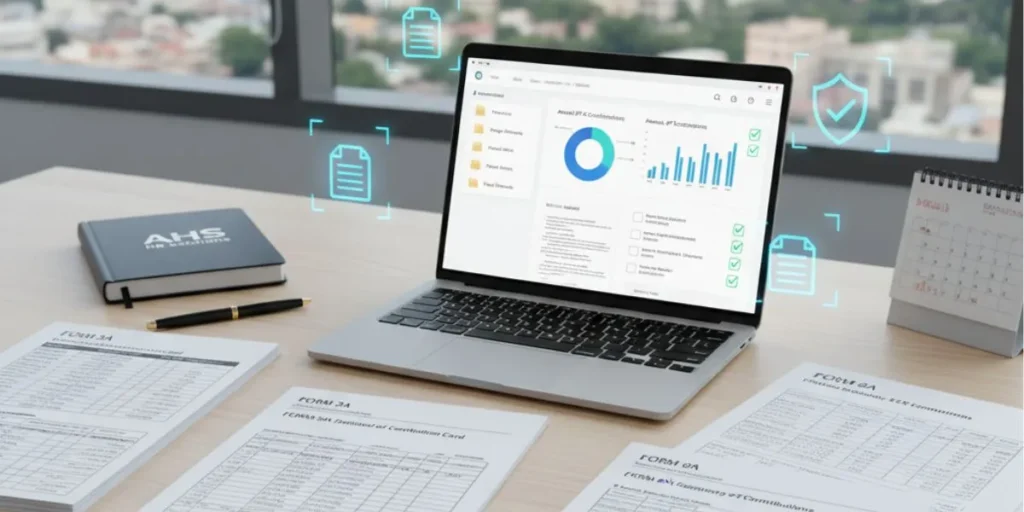
Keep these mandatory forms and records ready for inspection:
- ECR (Electronic Challan-cum-Return) for monthly wage and contribution details, replacing Forms 3A and 6A
- Wage registers and attendance records
- Monthly challans linked to ECR payments
Using ECR streamlines compliance by combining return filing and payment into a single, efficient online process, reducing paperwork and simplifying audit preparation.
Step 6 – Run an Internal Audit
Conducting periodic internal audits helps identify non-compliance before it turns into a penalty.
AHS HR Solutions uses an eight-point internal audit process to ensure total alignment with PF and ESIC standards.
New to outsourcing PF work? Start with our Pune PF consultant buying guide to avoid common pitfalls before engaging a consultant.
Step 7 – Train Your HR & Accounts Teams
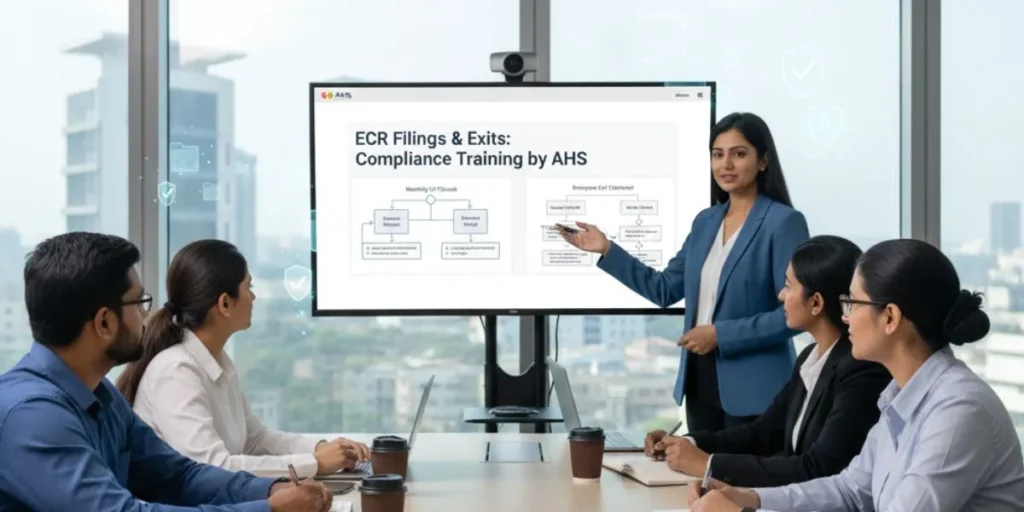
Compliance is an ongoing process. Errors often happen when HR or accounts teams are not fully trained on ECR uploads or employee exits.
AHS HR Solutions provides practical training sessions to help your teams manage filings, updates, and reconciliations effectively.
Step 8 – Track Your Compliance Calendar
Key PF compliance deadlines include:
- 15th of every month: File ECR and pay contributions
- April each year: File annual return and complete reconciliation
AHS HR Solutions provides clients with a digital compliance calendar and monthly reminders so no deadline is ever missed.
Keeping up with PF deadlines and documentation can feel overwhelming, but it doesn’t have to be. Check out our detailed guide: PF Compliance Checklist for Employers in Pune to make compliance simple and error-free.
Step 9 – Post-Audit Follow-Up
After the audit, review the inspection remarks carefully and respond promptly.
Implement the recommended corrections and retain proof of compliance for future reference.
Partnering with an experienced PF consultant in Pune like AHS HR Solutions ensures smooth post-audit resolution and ongoing compliance.
Benefits of Being Audit-Ready
- Avoid penalties, interest, and compliance risks
- Strengthen credibility with employees and authorities
- Build a transparent and reliable HR system
AHS HR Solutions has helped dozens of Pune-based companies maintain 100% on-time PF filings and audit clearance since 2022.
Conclusion
- Preparing for PF registration and compliance audits doesn’t have to be stressful.
- Not sure which services you actually need? This Pune-focused guide to hiring a PF consultant will help you identify the right service scope for your business.
- With the best PF consultancy services in Pune, AHS HR Solutions ensures you register smoothly, stay compliant, and pass every audit with confidence.
FAQs
What is the PF payment and filing deadline?
Both PF contribution payment and ECR filing must be completed on or before the 15th of every month.
What happens if PF is paid late?
Late PF attracts 12% interest and penalty (damages) ranging from 5% to 25%, depending on the delay period.
What documents are required for PF compliance?
Employers must maintain registration documents, employee KYC (UAN, Aadhaar, PAN, bank), wage & attendance records, ECR files, challans.
What are the key annual PF tasks?
Reconcile yearly PF contributions to ensure accuracy.
Update and verify employee KYC details (Aadhaar, PAN, bank info).
File the annual PF return and summary via ECR.
Pay administrative charges and EDLI dues.
Conduct internal audits of PF records.
Stay updated with regulatory changes and meet deadlines.
How do I ensure my company stays PF compliant?
Use accurate payroll data, track deadlines, update joiner/exits promptly, maintain proper documents, and review filings regularly.